


From Scrolling to Collecting: How Digital Platforms Are Transforming the Way We Discover and Buy Art
In the era of digital transformation, every aspect of our lives has undergone a radical shift, and the art world is no exception. Gone are the days when art buying was confined to exclusive galleries or elite circles of patrons. Today, the internet has opened up a whole new world of possibilities for artists and collectors alike.
From Instagram to online galleries, the digital landscape has fundamentally altered how art is created, accessed, promoted, and sold. As artists harness the potential of social media and online marketplaces, the barriers separating creators and collectors are melting away, fostering accessibility and reshaping the dynamics of the art market.
While these new avenues hold promise, this paradigm shift also sparks inquiries into issues of value, authenticity, and the enduring impacts on the art industry. In this article, we delve into the seismic changes brought about by digital platforms, share perspectives from insiders in the art business, and explore the consequences for the industry.
From Patronage to Public Museums
Centuries ago, the art world thrived on a system of patronage, where wealthy patrons, including royalty and aristocrats, held the power. They commissioned works reflecting religious or political themes, their preferences shaping what artists created. These pieces were showcased in private homes and public buildings, their display dictated by the patron's taste and the artist's reputation.
However, the 18th and 19th centuries saw the emergence of public museums and galleries, providing new venues for exhibiting art to a broader audience. Art academies played a crucial role in setting artistic standards, but avant-garde movements later challenged these norms, prioritising innovation and personal expression over tradition.
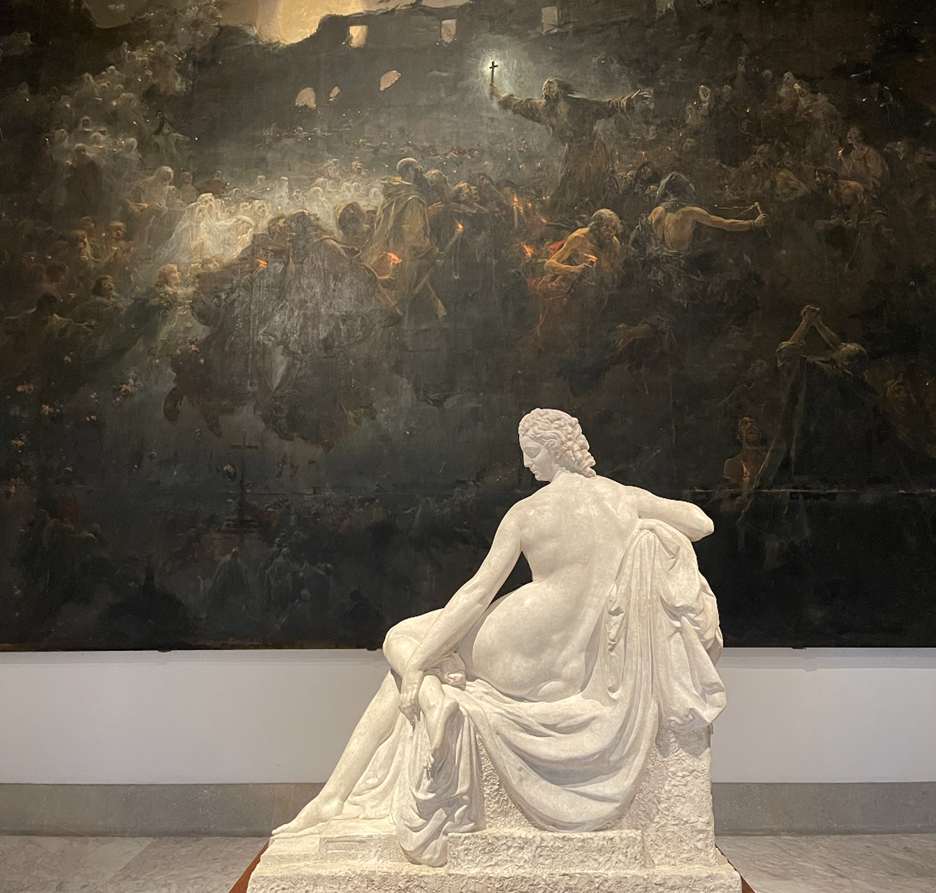
Fast forward to the 21st century, where the advent of the internet and digital platforms has revolutionised the art world, democratising art accessibility and distribution. Contemporary art galleries, dedicated to supporting artists and showcasing their work, have embraced virtual exhibitions, online catalogues, sales platforms and viewing rooms. Their websites, social media channels, and online marketplaces draw in a global audience, opening up the world of art to those who previously didn't have access.
Sarah Le Quang Sang, the Director of SLQS Gallery in London, shares her insights on the importance of digital platforms for her business:
"The gallery's digital presence is crucial nowadays because everyone is online. Given the visual nature of the art world, when developing our branding, we prioritised its compatibility with platforms like Instagram, ensuring a cohesive and visually appealing presentation. This foresight has provided us with a consistent template and format to follow. On social media platforms, you can easily blend into loads of different photos. So there was a lot of thinking behind it."
Sarah's words underscore how her gallery's online strategy was meticulously crafted to distinguish itself in the bustling digital sphere. Central to this approach was the emphasis on maintaining a visually striking and cohesive brand across multiple platforms, ensuring parity with other competitive galleries in the field.
Connection with the Artist
Modern art patrons like Peggy Guggenheim have played a crucial role in shaping the art world by providing financial and promotional support and guiding artists' careers. Today, digital platforms democratise this patronage, allowing anyone to support and engage with creators directly and on various levels.
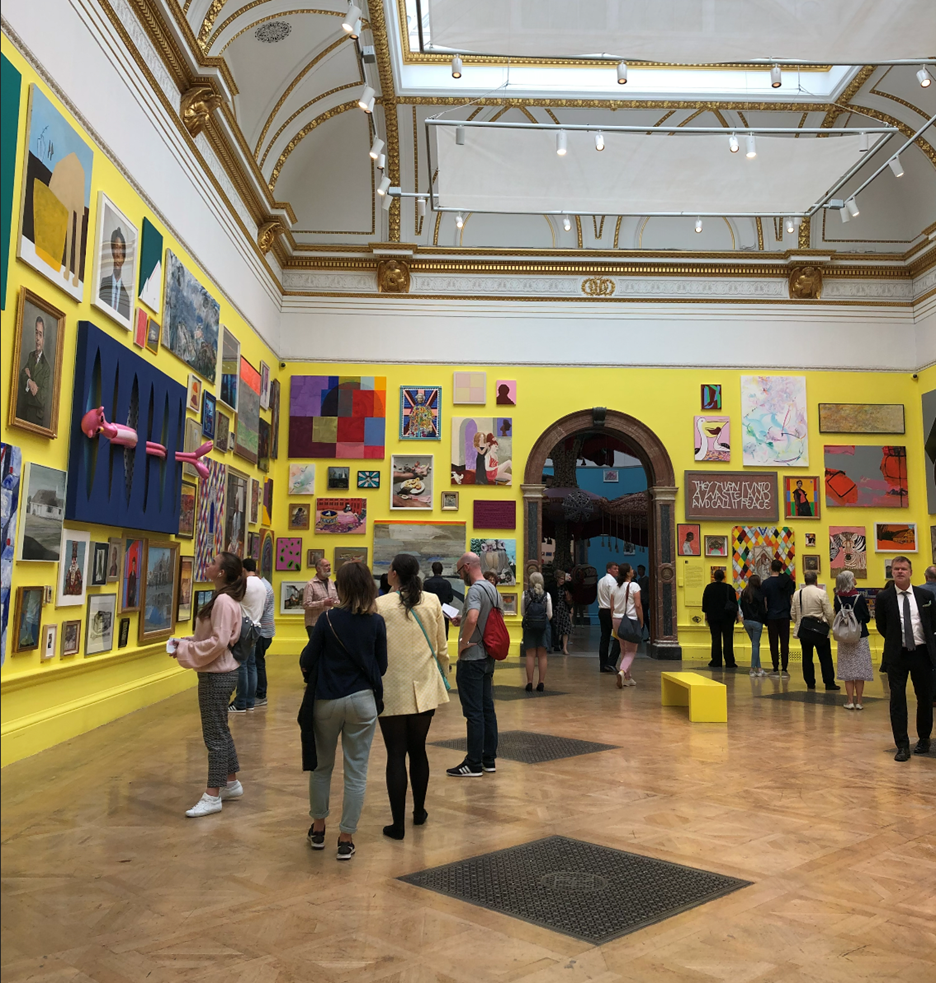
Crowdfunding platforms like Patreon and Kickstarter enable artists to fund their projects through direct contributions from fans, creating a new model of patronage that supports artistic innovation and independence. Social media platforms like Instagram and TikTok, and online marketplaces like Etsy and Saatchi Art, allow artists to showcase their work to millions, bypassing the traditional gatekeepers of the art world.
From the comfort of your home, you can get to know the artist on a personal level, DM them, negotiate prices, commission artwork, and have it delivered to any corner of the world without an intermediary.
Increased Visibility
In the past, access to the art world was tightly controlled by galleries, auction houses, and dealers, who selected artists based on societal norms and personal preferences. This often marginalised emerging or underrepresented artists. Today, however, contemporary art professionals are actively challenging this status quo. Digital platforms have levelled the playing field, providing opportunities for artists who have historically struggled for recognition—women, minorities, individuals, and others outside the traditional art market—to showcase their work to a global audience.
Katy Hessel’s book, "The Story of Art Without Men," and her Instagram channel, @thegreatwomenartists, provoke us to rethink art history by spotlighting the pivotal roles women played in shaping new art forms and styles. As an art historian, Hessel poses crucial questions: “How many women artists do you know? Who makes art history? Did women even work as artists before the twentieth century? And what is the Baroque anyway?” Her efforts shed light on the gender disparities in the art market and challenge conventional narratives, urging us to acknowledge and celebrate the contributions of women artists.

Moreover, digital platforms serve as vital sanctuaries for politically censored artworks. Sarah Le Quang Sang explains: “Digital presence allows you to reach a wider audience beyond the gallery, to reach internationally. My organisation focuses on giving visibility to artists who are women. I can give them visibility to an audience that they haven't had access to. In our last screening room, we had a Vietnamese artist named Vicky Do. She doesn't have an Instagram profile, but my work is about giving her visibility. She creates quite political work in Vietnam that she wouldn't really be able to showcase there. She takes a lot of risks when she creates that work. I feel like it's my role to give her a platform.”
In today's democratised contemporary art world, a diverse community of potential collectors discovers artworks that resonate deeply with their own stories and perspectives. These artworks dare to take risks and uncover truths that might otherwise remain obscured and forgotten.
Challenges and Opportunities in the Digital Age
The digital shift also presents challenges. Art fatigue and information oversaturation diminish the impact of artworks, which must now capture and sustain attention in a rapidly scrolling digital environment. The sheer volume of visual content can make it difficult for art to stand out, reducing potential buyers' engagement.
Marine Tanguy, a French art entrepreneur and the founder and CEO of MTArt Agency, addresses these issues in her book, "The Visual Detox: How to Consume Media Without Letting it Consume You." Tanguy writes,
"The average person sees about 10,000 commercial visuals a day. Yet, research shows we can only process about 1% of the visual information we encounter. If a picture is worth a thousand words, where does this excess leave us?"
As users scroll through their feeds, the constant stream of images blurs together, making it challenging for any single piece to leave a lasting impression.
Sarah Le Quang Sang highlights another challenge:
“I think the biggest challenge with selling online is good documentation of your artwork. Every artwork is unique. It's not like you're selling a pair of trainers and you know what a Nike pair of trainers is, and you can have a bad photo because you know what to expect. You need good lighting, good documentation, a white wall or a piece of furniture next to it. You really need to curate that photo.”
While the art world is more accessible and interconnected than ever, artists must navigate the complexities of standing out amidst a deluge of visual content, ensuring their work is both seen and appreciated.
Latvian contemporary artist Miķelis Mūrnieks, with 2,600 followers on Instagram, says, "As much as physical space, an online feed can be used as a great display of works with an even bigger reach. The question is how to stand out from all the madness that occupies endless feeds. Scrolling has made the average time of attention loss insanely low, with anything you post you have to get the attention in 3 seconds, or you fall down the drain with all the other crap posted by others."
Art Market - The Last Unregulated Market?
A Hiscox survey unveiled that 73% of art buyers turn to online platforms to research art before making a purchase. The intricacies of artwork pricing have long perplexed collectors, a challenge exacerbated by the growing availability of works. Establishing accurate value remains paramount, particularly in the face of authenticity and quality verification challenges online.
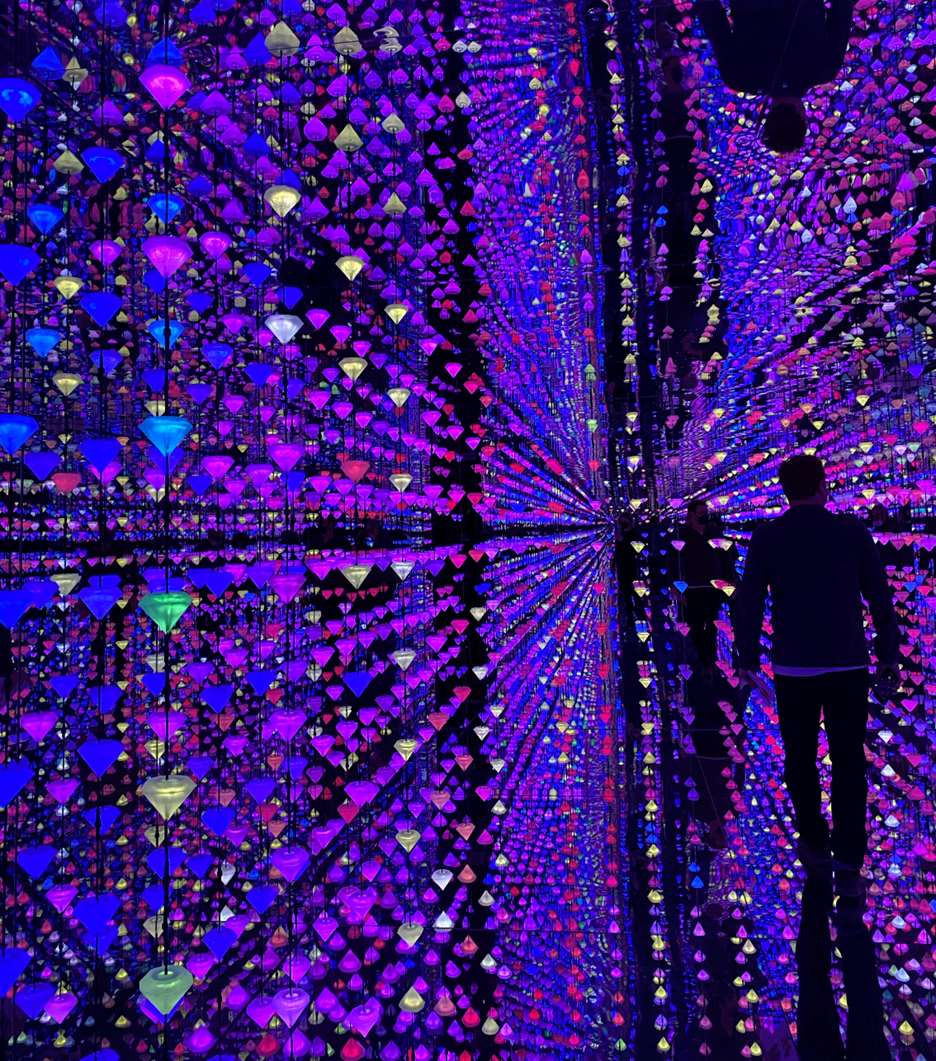
Initially promising transparency in pricing and ownership, NFTs experienced a sharp decline over the past two years following the burst of the crypto bubble. Art-related NFT sales on non-traditional platforms plummeted from a peak of $2.9 billion in 2021 to $1.2 billion in 2023, marking a stark 51% year-on-year decrease.
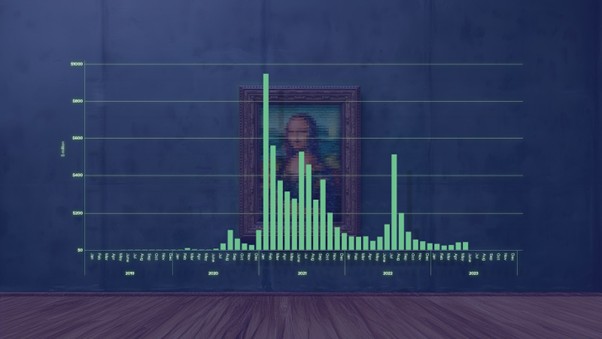
The absence of transparent pricing discussions has spurred the rise of scammers and 'flippers'—individuals who artificially inflate an artist's prices by quickly reselling artworks at inflated prices. This not only destabilises the artist's market value but also introduces volatility and erodes trust in the pricing integrity of other artworks.
Historically, art dealers with deep roots in art history and market expertise have been pivotal in determining artwork values. They evaluate an artist's background, uniqueness, talent, and potential market demand. In the secondary market, prices are influenced by initial purchase prices and fluctuations in an artist's perceived value.
Art prices are segmented to cater to diverse buyer demographics. Prices up to $1,000 attract emerging collectors, while mid-range prices between $1,000 and $10,000 appeal to seasoned collectors. Higher-end segments exceeding $10,000 target established collectors and high-net-worth individuals.
While pricing may seem straightforward when visiting reputable galleries and directly inquiring, the emergence of alternative platforms and artists setting prices based on online popularity or personal motives complicates the landscape. In today's art market, collectors navigate a dynamic intersection where traditional valuation methods meet evolving digital models, presenting both opportunities and challenges in equal measure.
Connection is The Key
Contemporary art buyers today increasingly seek artworks that resonate deeply with their personal journeys and values. Younger collectors, in particular, are drawn to pieces that not only reflect their individual interests but also address pressing social issues. Despite historical market dominance by male artists—capturing over 90% of total volume and 93% of market value according to auction data from the Art Basel & UBS Art Market Report—these traditional "trophy pieces" often fall short in capturing the attention of younger audiences. Instead, a new wave of collectors is gravitating towards art that speaks directly to their own stories and contemporary societal dialogues.
A global survey spanning from 2020 to 2023 highlighted that the primary motivation for art buyers remains a deep-seated passion for art. By 2023, an overwhelming 94% of respondents cited emotional enrichment as a crucial driver behind their art purchases, with 65% underscoring the significance of art's social impact and the patronage it embodies (Art buyers' main motivations for purchasing art worldwide 2020-2023, published by Statista Research Department).
To effectively target these evolving preferences, contemporary art dealers and artists are harnessing more inclusive and accessible platforms. Through meticulously crafted marketing strategies and direct engagement on these platforms, they are not only expanding their collector bases but also fostering meaningful connections with audiences. In navigating today's vibrant art market, where personal resonance and societal relevance converge, these initiatives serve to deepen the dialogue between creators and their admirers, enriching the cultural fabric of our times.
Emerging Art Markets and Tastemakers
Looking at the global economy, one can observe a clear link between economic fluctuations and art market dynamics. Periods of financial instability often lead to decreased disposable income, resulting in declines in art sales. According to the 2024 Art Basel and UBS Report, the global art market experienced a 4% downturn in 2023, with total sales dropping to an estimated $65 billion. This decline is attributed to factors such as high interest rates, inflationary pressures, and political uncertainties, particularly impacting the high-end market segment.

Despite this overall downturn, online art sales grew by 7% to reach $11.8 billion. This growth underscores a significant pivot towards digital platforms in the art market. Over the past four years, the pandemic notably accelerated the shift towards online art sales, with volumes doubling from 2019 to 2020. This transformation has not only democratised access to art sales but has also expanded global participation and broadened the collector base.
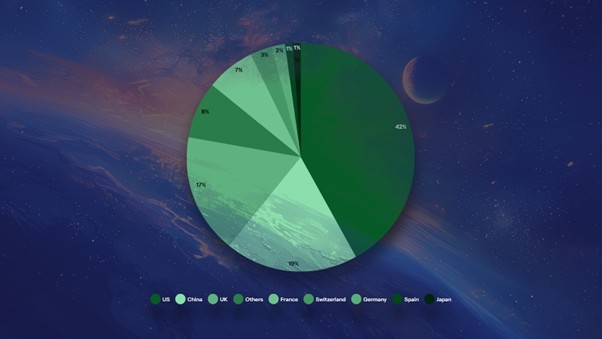
Regional economic conditions also exert a profound influence on art market dynamics. As per the 2024 Art Basel x UBS Report, the United States maintained its dominance as the leading global market, commanding 42% of total sales by value. Meanwhile, China, emerging from pandemic-related restrictions, surpassed the UK to become the second-largest market with a 19% share, while the UK fell to third place at 17%. France maintained a stable fourth position with 7%, highlighting the fluidity of global art market rankings driven by economic resilience and cultural investments.
The projected influx of young, affluent collectors, particularly from Asia, promises to inject fresh capital and vitality into the market. Adapting to these evolving demographics and embracing the digital evolution will be pivotal for art businesses seeking to capitalise on future growth opportunities.
The Allure of the Personal
The influence of the digital realm on consumer behaviour introduces complexities to art transactions. Many prospective buyers hesitate to commit to artworks they cannot physically inspect, leading to hesitancy in making purchases. Video and digital artworks face additional hurdles in achieving commercial viability and appreciation, often requiring expert interpretation to be fully comprehended and valued. This reluctance is particularly pronounced for high-value pieces, where the tactile experience and physical presence of the artwork play pivotal roles in the purchase decision-making process.

The 2024 Art Basel & UBS Art Market Report underscored that while online-only sales witnessed numerous transactions at high prices, the majority of the most expensive works continued to be sold predominantly offline. Data from the fine art auction sector in 2023 revealed that, akin to offline auctions, over 95% of transactions in online-only auctions were for prices under $50,000. However, unlike traditional auctions heavily concentrated in the $1 million-plus segment, online-only fine art auctions in 2023 saw 58% of their market value generated from sales under $50,000, with over 85% of works sold for less than $250,000.
Sarah Le Quang Sang emphasizes the enduring importance of face-to-face interactions in the art world:
"Meeting in person remains perhaps the most significant way to truly connect with others. It's not just about the artwork; it's also about the stories—the storytelling of the artist and the gallery. That's what people like to hear and know. When you are face-to-face, it's very personal. I try to have as many face-to-face meetings as possible."
The Art Always Changes
In the ever-evolving landscape of the art world, stakeholders must embrace digital strategies. As technology advances and virtual platforms entwine themselves deeper into our daily lives, the art market stands at the threshold of profound transformation. Artists, collectors, and enthusiasts alike are tasked with not just adapting to these changes, but with pushing the boundaries of creativity, commerce , and community.

Delving into the digital art world, discovering emerging talents online, and championing local artists and galleries emerge as crucial endeavours. These actions are not merely about the present; they are essential for the sustained enrichment of the art community across generations. Yet, amid this digital revolution, it is equally vital to maintain unwavering dedication to artistic integrity and curatorial standards.
By creating a supportive and inclusive environment, the art world can continue to flourish, navigating swiftly through the myriad challenges and abundant opportunities that define the digital age.
Sources:
Hiscox online art trade report 2021
The Art Basel & UBS Art Market Report 2024
Main motivations for buying art among art collectors worldwide as of May 2023

